Global Manufacturers Optimize Supply Chain Networks and Logistics to Save Millions
A global tire manufacturer used Axonis AI to optimize reverse logistics and reduce transportation costs. By applying intelligence at the source, it saved tens of millions.
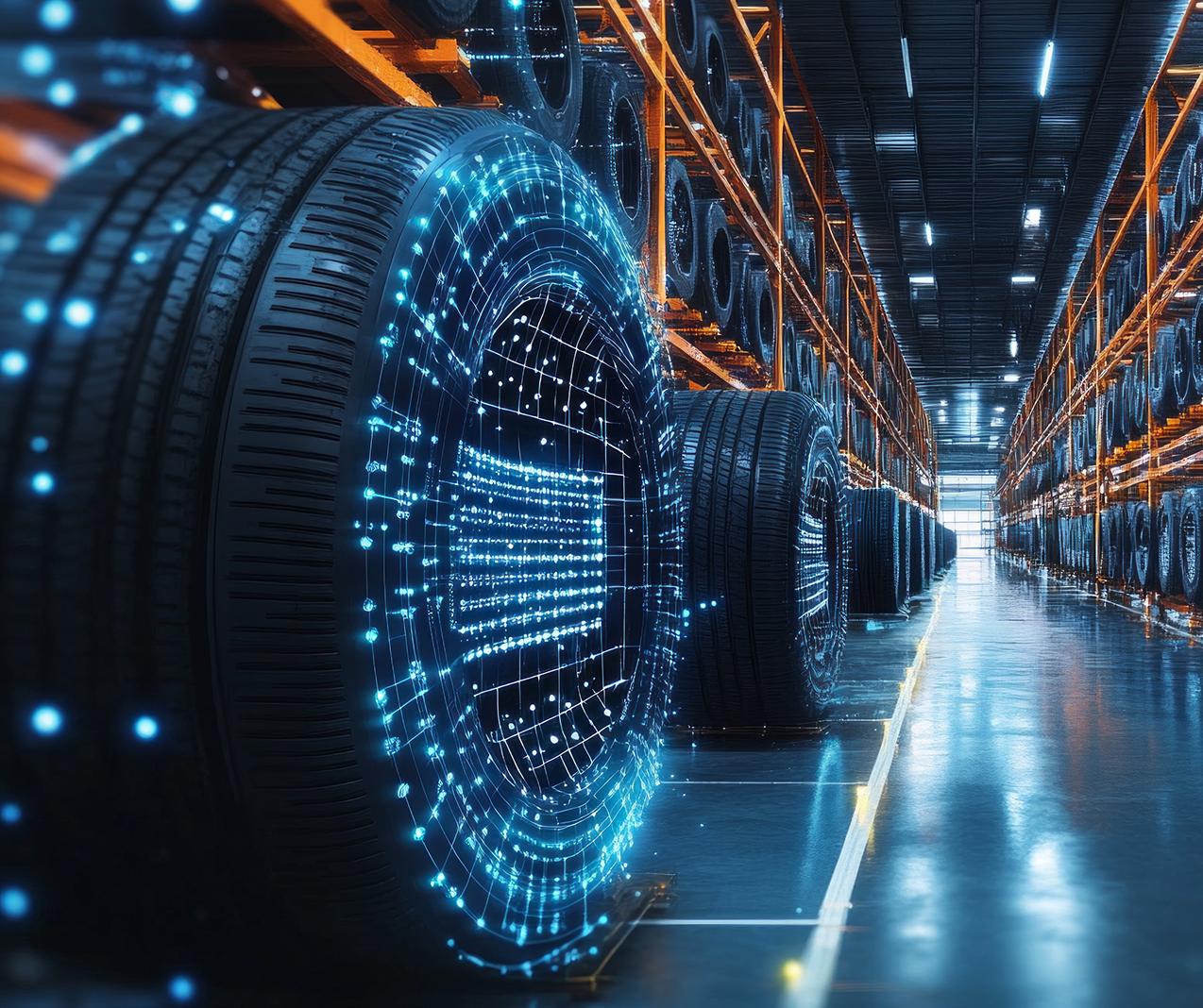
A global tire manufacturer sells its products through a highly distributed ecosystem comprising direct-to-consumer channels, company-owned stores, third-party retailers, tire outlet chains, and distributors, including national warehouse clubs like Costco, Sam’s Club, and Discount Tire.
The company introduced a tire subscription program to improve customer convenience and loyalty. Rather than purchasing tires as a one-off transaction, subscription customers receive maintenance and replacements. While the program was successful in driving customer satisfaction, it introduced operational complexity and costs.
Subscription customers frequently replace tires before the end of life, resulting in a steady stream of returned tires that must be inspected and routed for recycling or resale. Under the existing operating model, all returned tires, regardless of condition, were shipped to manufacturer facilities, where they were manually sorted and processed.
This approach was expensive and inefficient. It required:
- Transportation coordination across a distributed supply chain network
- Excessive warehousing and inspection
- Redundant transportation costs for recycling or resale
The manufacturer and its retail and logistics partners operated independently, each with its own systems, data, and governance. Centralizing data to support decision-making across this network was not feasible.
As a result, the manufacturer lacked real-time insight into tire returns and fulfillment data, leading to higher logistics costs from avoidable transportation and centralized storage. The solution required intelligence at the source, where return and routing decisions occur. The tire manufacturer needed a way to access full supply chain network data in real time.
Federated AI That Brings Intelligence to the Point of Action
Rather than attempting to centralize data, the tire manufacturer employed Axonis’ federated AI architecture that allowed models to be trained and executed where data already lived – at the partner sites and systems across the retail network.
With Axonis Federated AI:
- Each participant/partner retained full ownership and control of its supply chain fulfillment data
- AI was moved to the data, rather than data being moved to a central platform for AI application.
- Intelligence could be applied locally, in real time, at the point of sale and service
- AI fulfillment and supply chain models improved significantly by accessing all partner data in real time while providing military grade security, privacy, and governance.
This architecture enabled secure collaboration across the manufacturer’s supply chain network without exposing raw data or disrupting existing operations.
Optimizing Returns and Reverse Logistics at the Source
Using Axonis Federated AI models deployed across the tire manufacturer's supply chain network, the company transformed how subscription-related returns were handled.
At the moment a tire was removed from a vehicle, the system could now determine:
- Whether the tire should be recycled or returned
- Where it should be routed next
- Which downstream facility should receive it
Instead of shipping every tire back to a central warehouse for inspection, decisions were made immediately and locally. Retailers could send tires directly to recyclers or repurposing facilities. Only a subset of tires needed to return to the manufacturer.
This eliminated unnecessary transportation, reduced handling, and removed the need for centralized sorting infrastructure.
Tens of Millions in Savings and a More Efficient Supply Chain
By bringing AI to the data, the tire manufacturer was able to cost effectively and quickly apply intelligence at the source, achieving measurable impact:
- Tens of millions of dollars saved in reverse logistics and supply chain costs
- Elimination of a centralized tire-sorting warehouse
- Significant reduction in transportation volume and associated emissions
- Faster, more consistent customer experiences across all retail channels
- Improved unit economics for the tire subscription program
- Improved fulfillment rates across the entire tire subscription supply chain
- Reduced inventory costs and improved inventory turns
The company also strengthened relationships across its supply chain ecosystem by enabling collaboration without forcing partners into shared systems or data pools.
Deployment and Costs
Enterprises don’t struggle with AI because they lack data or models. They struggle because traditional architectures can’t operationalize AI across real-world, distributed environments.
Deployment: 45 Days
Instead of launching a multi-year data centralization project, the manufacturer focused on getting AI into production quickly, using existing operational data where it already lived. Federated AI made it possible to reduce costs and improve efficiency immediately, without disrupting partner autonomy or governance.
As a result, they:
- Reduced inventory carrying costs by 22%
- Improved inventory turns by 15%
- Reduced logistics costs by 12%
- Improved resale of subscription tires by 15%
- Reduced the waste of used tires by 10%
Let’s talk about how Axonis can optimize your supply chain and decrease logistics costs.